
The Moment That Shook a Press Conference
Oslo, Norway. Indian Prime Minister Narendra Modi has just finished a joint media appearance with Norwegian PM Jonas Gahr Støre. The leaders are leaving. No questions taken. No reporters acknowledged it.
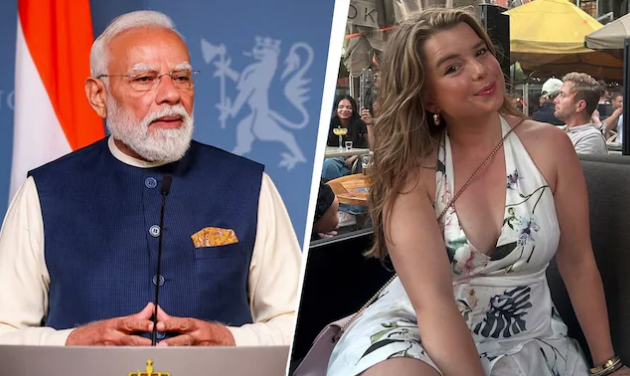
Then, from the back of the room, a voice cuts through the silence.
Primeminister of India, Narendra Modi, would not take my question, I was not expecting him to.
— Helle Lyng (@HelleLyngSvends) May 18, 2026
Norway has the number one spot on the World Press Freedom Index, India is at 157th, competing with Palestine, Emirates & Cuba.
It is our job to question the powers we cooperate… pic.twitter.com/vZHYZnAvev
“Why don’t you take some questions from the freest press in the world?”
That voice belonged to Helle Lyng—a Norwegian journalist who, until that moment, was relatively unknown outside her country’s media circles. Within hours, her name was trending across India, Norway, and beyond. Her follower count on X exploded from roughly 800 to over 17,000. And she found herself at the center of a geopolitical firestorm she never saw coming.
So who is this journalist? And why did one shouted question turn her into an overnight global figure?
From Local Newsrooms to International Headlines
Helle Lyng Svendsen isn’t a household name in global journalism — and that might be exactly why her story resonates.
Her Career Path
Lyng has built a solid career in Norwegian media over several years. She previously worked as a journalist for Nettavisen, one of Norway’s major online news outlets.
Currently, she serves as a commentator at Dagsavisen, an Oslo-based newspaper. While Dagsavisen isn’t among Norway’s top-circulation papers (it has fewer than 14,000 readers), it’s respected for its political and cultural commentary.
Books That Explain What Helle Lyng Did
| Book | Why It Matters | Check Price |
|---|---|---|
|
The Elements of Journalism by Bill Kovach & Tom Rosenstiel | The bible on what journalism owes the public. Explains exactly why Lyng’s question mattered. | View on Amazon → |
|
Manufacturing Consent by Noam Chomsky & Edward Herman | The classic on how media filters information. Essential context for understanding press freedom gaps. | View on Amazon → |
|
The Journalist and the Murderer by Janet Malcolm | A deep dive into journalist ethics and the moral complexity of confronting power. | View on Amazon → |
Disclosure: As an Amazon Associate, we earn from qualifying purchases. This doesn’t cost you extra.
Her journalism has covered a wide range of topics — from Norwegian domestic politics to international affairs. She’s been critical of the Trump administration, written about China’s global role, and examined issues like youth drug addiction in Norway.
What makes her stand out isn’t a massive platform or celebrity status. It’s something simpler: she believes journalists should ask hard questions, even when it’s uncomfortable.
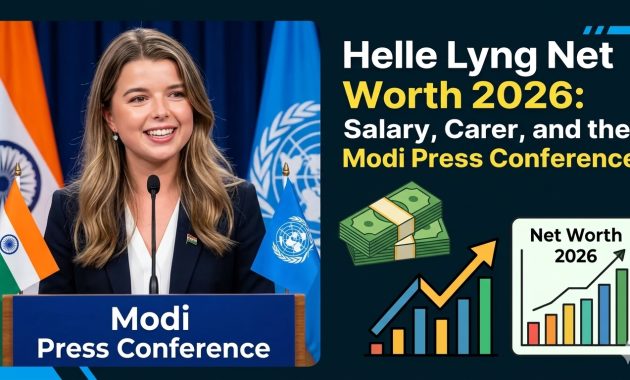
Helle Lyng Net Worth: What We Know
Estimated Net Worth: $150,000 – $400,000 (as of 2026)
Let’s be upfront: there is no official disclosure of Helle Lyng’s net worth. Unlike Hollywood celebrities or business moguls, Norwegian journalists rarely publish their financial details. However, based on publicly available salary data for her position and experience level, here’s a reasonable estimate:
| Source of Income | Estimated Annual Earnings |
|---|---|
| Dagsavisen commentator salary | $55,000 – $75,000 USD |
| Previous work (Nettavisen, freelancing) | $40,000 – $60,000 USD (historical) |
| Freelance contributions (MSN, other outlets) | $5,000 – $15,000 USD |
| Potential speaking/media appearances | Variable |
How we calculated this:
- Norwegian journalists with 5–10 years experience typically earn 450,000–650,000 NOK (~$42K–$60K USD) at national outlets
- Dagsavisen is a smaller, established paper — salaries trend mid-range
- Freelance work for international platforms (MSN) adds modest supplemental income
- No evidence of book deals, major brand partnerships, or side businesses
Net worth estimate factors in: ~8–12 years in journalism, standard Norwegian savings rates, Oslo cost of living (high), and no known major assets or inheritances.
⚠️ Disclaimer: This is an educated estimate based on industry salary data, not verified financial disclosure. Actual figures may vary.
Why Her Question Mattered (And Why People Can’t Stop Talking About It)
Here’s where things get interesting — and where your readers will want to keep scrolling.
The Press Freedom Angle
When Lyng confronted PM Modi, she didn’t just challenge one leader. She highlighted a stark contrast in how two democracies treat the press:
| Country | Press Freedom Index Rank (2026) |
|---|---|
| Norway | #1 |
| India | #157 |
Norway consistently tops the World Press Freedom Index. India, despite being the world’s largest democracy, ranks in the bottom tier. Lyng’s question wasn’t random — it was rooted in this massive gap.
What Happened Next
The story didn’t end with that one moment. Here’s the timeline of how it unfolded:
Monday, May 18, 2026 — Lyng shouts her question as Modi leaves the joint briefing. The video goes viral.
Later that day — The Indian Embassy in Norway invites her to a press briefing with MEA Secretary (West) Sibi George. The exchange turns tense. George responds with a meandering defense touching on India’s civilization, yoga, chess origins, and COVID diplomacy. Lyng interrupts, seeking direct answers. At one point, she walks out and returns.
The aftermath — Lyng faces a torrent of online abuse. She’s called a “foreign spy,” a “Chinese proxy,” and worse. She has to publicly state: *”I never thought I would have to write this, but I am not a foreign spy of any sort, sent out by any foreign government. My work is journalism, primarily in Norway now.”*
The twist — Her social media accounts get restricted. She expresses shock at being “shut out” after asking a question.
The Bigger Picture
This isn’t just about one journalist and one prime minister. It’s about:
- The role of journalists in democracies — Should reporters interrupt if leaders avoid questions?
- Press freedom as a diplomatic issue — Can a country’s media treatment affect its global standing?
- The price of speaking up — Lyng gained 17,000+ followers but also faced harassment and account restrictions.
Indian opposition leaders like Rahul Gandhi seized on the incident, tweeting: “When there is nothing to hide, there is nothing to fear.” Lyng even reached out to Gandhi for an interview — showing she’s not done asking questions.
What This Means for You (And Why You Should Care)
Whether you’re a journalism student, a media watcher, or just someone who cares about how democracies function, Helle Lyng’s story offers real lessons:
1. One Question Can Change Everything
Lyng wasn’t a famous investigative reporter with a documentary crew. She was a commentator at a small Norwegian paper who saw an opportunity and took it. You don’t need a massive platform to make an impact — you need courage and timing.
2. Press Freedom Isn’t Abstract
Norway’s #1 ranking isn’t just a statistic. It means journalists there are culturally expected — even encouraged — to challenge power. India’s #157 ranking isn’t just a number either. It reflects real restrictions, self-censorship, and risks that reporters face daily.
3. The Backlash Is Real
Lyng’s experience shows that asking tough questions still carries a price. Online harassment. Account restrictions. Accusations of being a “spy.” If you’re considering journalism as a career, understand that scrutiny of power often invites scrutiny of yourself.
4. Follow the Story
This is still developing. Lyng has indicated that videos of her exchanges will be published. The Indian political reaction continues. And her growing platform means she’ll likely have more opportunities to ask the questions others won’t.
| Detail | Information |
|---|---|
| Full Name | Helle Lyng Svendsen |
| Current Role | Commentator, Dagsavisen (Oslo-based newspaper) |
| Previous Work | Journalist at Nettavisen; freelancer for multiple Norwegian outlets and MSN |
| Notable For | Confronting PM Narendra Modi over press freedom during Oslo visit (May 2026) |
| Social Media Growth | ~800 to 17,000+ X followers in under 48 hours |
| Key Quote | “Journalism can be confrontational… reporters have a responsibility to seek direct answers.” |
FAQs About Helle Lyng
Is Helle Lyng a spy or foreign agent?
No. Lyng has explicitly denied these allegations, stating she is a journalist working primarily in Norway. The “spy” claims appear to be online conspiracy theories without evidence.
What newspaper does she work for?
She is currently a commentator at Dagsavisen, an Oslo-based Norwegian newspaper. She previously worked for Nettavisen.
Why did she ask PM Modi that question?
Lyng stated that journalism requires questioning those in power. She highlighted Norway’s #1 press freedom ranking versus India’s #157 ranking as context for her question.
Did PM Modi respond to her?
It’s unclear if Modi heard the question. He left the room without taking questions. Later, Indian officials invited Lyng to a separate briefing where the exchange grew tense.
What happened to her social media accounts?
Lyng reported that her social media accounts were restricted following the incident, which she described as shocking.
Final Thoughts
Helle Lyng’s story is a reminder that journalism, at its core, is about asking the questions power doesn’t want to answer. Whether you agree with her methods or not, her rise from obscure commentator to global talking point in 48 hours shows that in 2026, one moment of conviction can still cut through the noise.
The real test now isn’t whether she went viral — it’s whether she, and journalists like her, can keep asking questions without paying a price that silences them.
What do you think? Should reporters interrupt leaders who avoid questions? Drop your thoughts in the comments below.